
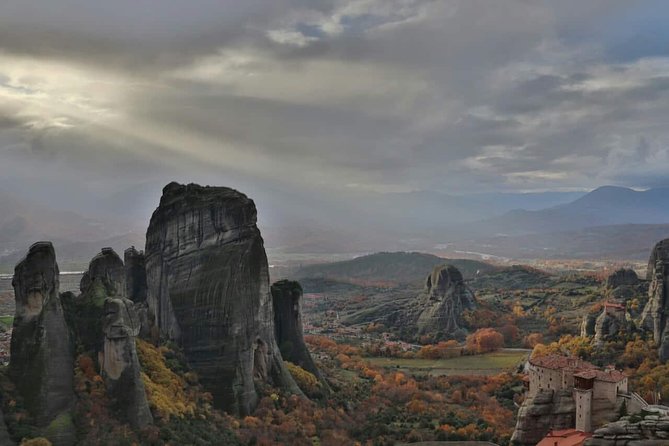
Reviewed · METEORA MONASTERIES TOURS
Meteora All Monasteries Tour with Photo Stops
Meteora is best understood from several angles: from the road, from a monastery balcony, and from the foot of a cliff where early hermits lived. This small-group tour brings those views together in about four hours, using a comfortable minibus to reach three monasteries plus several hard-to-find photo stops.
I like the eight-person maximum, which keeps the outing personal, and I like the guides’ warm, useful style. Joanna, Christina, Ioanna, and other guides are praised for clear explanations, flexible pacing, and taking excellent photos for their groups. The main drawback is time: four hours can feel tight, especially if a train delay leaves you with only about three hours.
Key points
- Three monastery visits: See the interiors, frescoes, and mountain views at three of Meteora’s monasteries.
- Small group of up to eight: The minibus format makes it easier to ask questions and request photo stops.
- Hermit sites beyond the main monasteries: Visit Saint Antonios and St George the Mandilas for a broader look at Meteora’s religious past.
- A Byzantine church predating the monks: See the church of the Virgin Mary, built about 300 years before the first monks arrived at Meteora.
- Practical half-day timing: The tour begins at 12:50 p.m. in Kalambaka and returns to the meeting point.
- Bring cash and suitable clothing: Monastery admission costs €3 per person, and modest dress is required.
Why this four-hour Meteora tour works
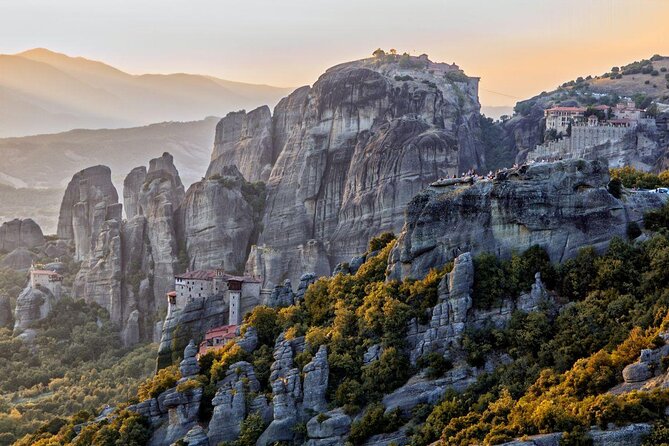
Meteora can be awkward to visit without your own car. The monasteries sit high above Kalambaka, roads wind through the rock pillars, and the best viewpoints are not always obvious from town. This tour takes care of the driving and strings together the major sights without asking you to plan every turn.
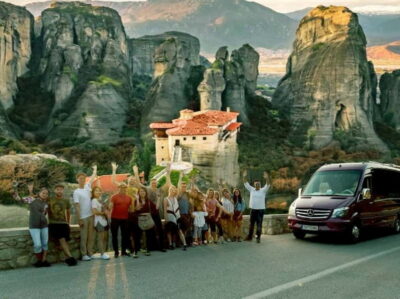
The group is capped at eight people, and transport is in an air-conditioned VIP minibus. That matters here. You are not just riding between two city addresses. You are moving along mountain roads, stopping often, and sharing the vehicle with people who are there for the same reason: the monasteries and the views.
Your tour leader stays with you during the outdoor sightseeing and explains the area, but does not provide commentary inside the monasteries. That distinction is important. You get an overview of Meteora’s religious story, local setting, wildlife, and architecture on the road and at the stops. Inside, you explore on your own.
The tour is priced at $35.07 per person, before monastery entrance fees. Add €3 for each monastery you enter, or €9 if you visit all three. For a half-day outing with transport, a guide, and several scenic stops, that is a fair price, particularly if you arrive in Kalambaka by train and do not have a car.
A few other Meteora mornings to price up
- Meteora Sunset with Monastery & Hermit Caves Tour in Small Group
★ 5.0 · 706 reviews - Meteora Small Group Hiking tour with Transfer and Monastery Visit
★ 5.0 · 484 reviews - Meteora: Morning Half Day Sightseeing and Monasteries Tour
★ 4.7 · 478 reviews
Starting in Kalambaka at 12:50 p.m.
The listed meeting point is in Kalambaka, also spelled Kalabaka, at 422 00, Greece. The tour starts at 12:50 p.m. and ends back at the meeting point. If you arrive by train, pickup from the Kalambaka station can be arranged, which removes one small but annoying transfer from your day.
Athens and Thessaloniki both connect with the Meteora area by train and bus. Trains from Athens leave from Larissa Station, while buses serving northern Greece depart from Terminal B on Liossion Street. The operator also says that minibus pickup from Athens or Thessaloniki may be arranged by contacting them.
I would pay close attention to your arrival time. One booking party found that a changed train schedule and a canceled early train reduced the available tour time to about three hours. That is not enough room for a relaxed visit to three monasteries, several viewpoints, and the other stops. If your transport connection is uncertain, consider spending a night in Kalambaka rather than building the entire experience around a tight same-day connection.
Saint Antonios and Meteora’s first hermits
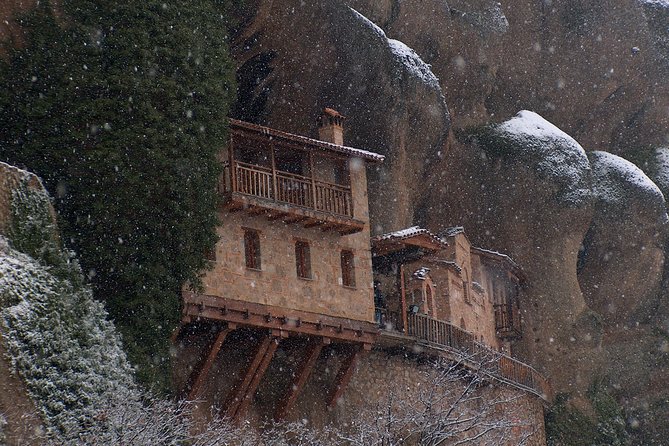
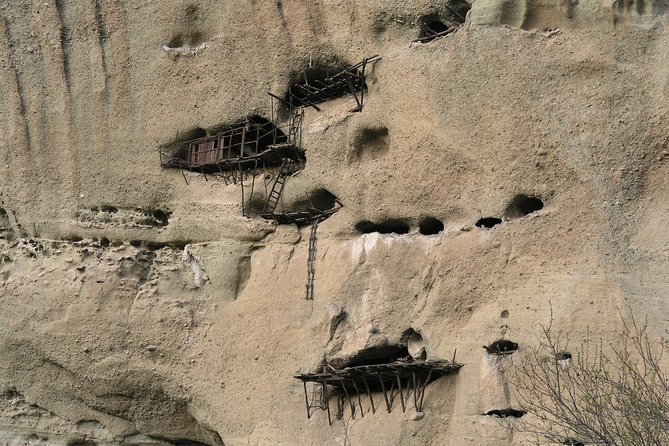
Saint Antonios gives you a useful starting point because it reaches back before the grand monasteries. This is where the first hermits arrived in the Meteora area, seeking solitude in the cliffs and caves.
Do not expect the same scale as the major monasteries. The value here is context. Before monks built complex religious houses on the rock towers, individual hermits were already using this difficult terrain for prayer and retreat. Seeing the early site helps you understand why Meteora became a religious center in the first place.
The guide’s stories are especially useful at stops like this. Names such as Joanna and Christina have been associated with clear accounts of the hermits, saints, and later monastic communities. The exact guide on your departure may differ, but the tour depends heavily on the leader’s ability to connect the physical site with its past.
Three monasteries, three different visits
The central part of the outing is a visit to three monasteries. You will also view the other monasteries from the road and viewpoints, but the tour does not take you inside every religious complex in the area.
At each monastery, expect stairs and walking. The rock-top buildings are not level-access attractions. One particularly useful warning from the practical side of the experience is the sheer number of steps. You need a moderate level of fitness, and you should be ready to climb, pause, and stand for periods of time.
The reward is more than a good photograph. Inside, you may see frescoes, religious art, old chapels, and unusual architecture. Outside, balconies and paths open toward Kalambaka and the surrounding cliffs. The contrast is part of the experience: quiet, carefully decorated interiors followed by huge open views.
The tour leader does not accompany you inside the monasteries as an in-house guide. That means you should listen carefully to the explanations given before entering, then take your time with the interior. If you prefer a detailed lecture beside every fresco, this format may feel light. If you like to receive the main context and then explore independently, it works well.
Plan for €3 in cash per monastery. Several monasteries may not accept cards, so do not rely on a phone wallet or credit card. The listed entrance fee is €3 per person, excluded from the tour price.
Same island, an entirely different sort of day:
- Meteora: Guided Sunset Tour with Monasteries & Caves Visit
★ 4.7 · 409 reviews - Meteora: Majestic Sunset Tour & Monasteries with Local Guide
★ 4.7 · 359 reviews - Meteora Monasteries Half-Day Small Group Tour with Transport
★ 5.0 · 339 reviews - Meteora: Panoramic Morning Small Group Tour with Local Guide
★ 4.7 · 334 reviews
St George the Mandilas and the smaller stories
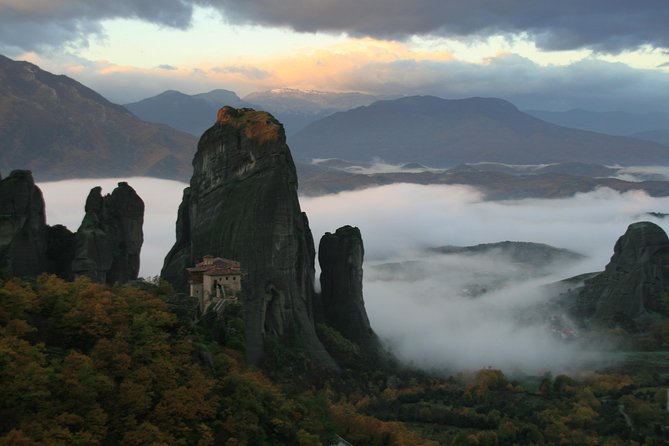
St George the Mandilas adds another layer to the route. It is one of the stops that helps you see Meteora as more than a collection of famous monasteries.
The site is tied to a local tradition involving cloth offerings, and its position among the cliffs makes it a memorable photo stop. The precise amount of time here depends on the group and the day, but it is included among the tour’s named highlights.
This is where a small group helps. You can ask the guide why the place matters, how it fits into the area’s religious traditions, and where to stand for a better view. A large coach group tends to move people through such a stop quickly. With up to eight people, the guide can respond to individual questions and help with pictures.
The Byzantine church of the Virgin Mary
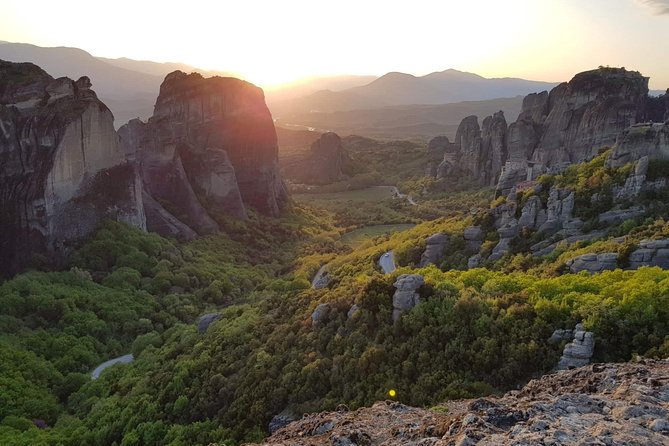
The Byzantine church dedicated to the Virgin Mary offers a different kind of historical marker. It was built about 300 years before the first monks arrived in Meteora.
That date changes how you read the area. Meteora was not created from nothing when the monasteries appeared. The church shows that worship and settlement in the region already had an earlier Byzantine chapter.
The stop also breaks up the focus on the cliff monasteries. You get a look at religious architecture closer to the town and a reminder that the area’s story includes more than the dramatic buildings perched above the valley.
The photo stops are a real part of the tour
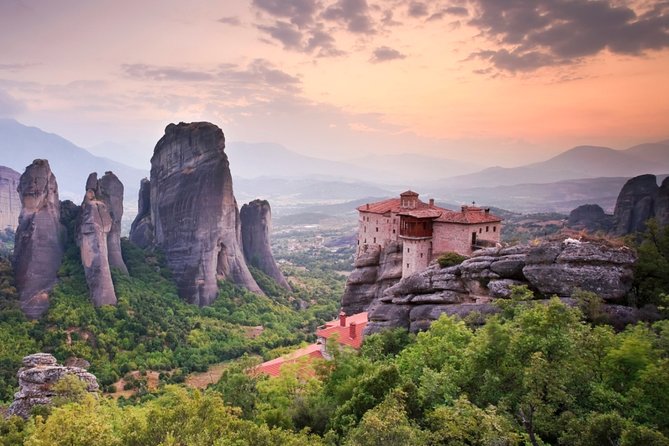
The title promises photo stops, and the route makes good use of them. Your guide takes you to viewpoints that can be difficult to locate alone, with angles toward the monasteries, the cliffs, and Kalambaka below.
You can request stops for pictures, though the group still needs to keep to the four-hour schedule. The best approach is to take a few quick photographs, then put the phone away for a moment. Meteora’s scale is easy to miss when you are busy checking every image.
Guides including Joanna have been praised for taking group photographs at particularly good viewpoints. That is a small service, but it matters if you are traveling alone or want a picture with the rock towers behind you. The driver may also provide bottled water during the outing, and the minibus has air-conditioning.
The route is not simply a transfer from one monastery gate to another. It uses short roadside stops to show you the whole setting. From one angle, the monasteries look almost suspended above the valley. From another, they blend into the pale rock. Seeing several viewpoints gives you a better sense of how exposed and isolated the old monastic sites really are.
What the guides add
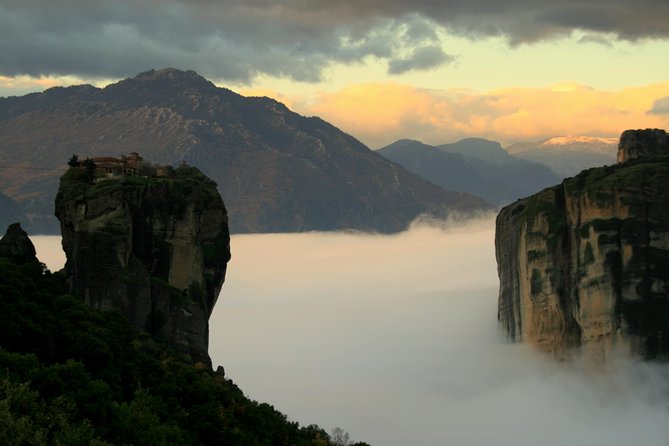
The strongest part of this experience is the guide-and-driver team. Joanna, Ioanna, Christina, Cristina, Maria, Nikos, and Kostas are names associated with the operation, though you should not assume a particular person will lead your departure.
The guides are described as friendly, patient, and well informed. They explain the history of the monasteries and the area without turning the afternoon into a long classroom session. Several guide and driver pairings are also noted for working well together, with the driver handling the mountain roads and the guide handling the stories and timing.
You can expect recommendations for other things to do in the area, help with photographs, and attention to comfort. One group had its transport delay accommodated, while another received water during the trip. These touches do not replace good sightseeing, but they make a difference during a short outing.
Do keep expectations in check. The guide is not an official interpreter inside each monastery. The tour gives you an informed overview, then leaves you to experience the interiors at your own pace.
Dress, stairs, food, and cash
Meteora’s monasteries follow modest dress rules. Men should wear long pants. Women should bring a long skirt, and long trousers may not be accepted at every monastery. Some monasteries lend skirts, while others may require you to buy one. A guide may be able to lend you one, but I would not count on that.
Wear shoes suitable for stairs and uneven walking. The tour requires moderate physical fitness, and the amount of climbing is easy to underestimate when you are focused on the views.
Food is not listed as included. You can bring a sandwich, and there may be a food truck near one of the monasteries. Water refill points are available in several places, and bottled water may be offered during the trip, but bringing your own water is sensible.
The tour is not designed as a full meal outing. Eat before you leave or pack something small so your monastery time is not interrupted by a search for lunch.
Is $35.07 a good value?
At $35.07, the tour offers a practical way to reach three monasteries and several viewpoints without renting a car. You also get an air-conditioned minibus and a tour leader, which is a strong combination for a four-hour visit.
The extra cost is modest but easy to overlook. Monastery entrance is €3 per person at each of the three visits, and those fees are not included. Train or bus tickets to Kalambaka are also separate, as is any food you bring or buy.
The value drops if your transport problems shorten the tour. Three hours can feel rushed, particularly when you need to climb stairs at three different sites. If you are already staying in Kalambaka, the timing is much simpler. If you are trying to travel from Athens and return the same day, the schedule deserves careful checking.
Who should book this tour?
I would choose this tour if you want to see a lot of Meteora in half a day, prefer a small group, and do not want to drive mountain roads yourself. It suits first-time visitors who want the basic story, three monastery interiors, scenic viewpoints, and help with the route.
It also works well for solo travelers, couples, and families who value personal attention. The small vehicle makes it easier to ask questions and request photographs than it would be on a large coach.
I would think twice if you want long visits at every monastery, extensive hiking, or a full guided explanation inside the religious buildings. Four hours is enough for a strong overview, not an unhurried study of every site. If you want more breathing room, stay overnight in Kalambaka and consider returning for another monastery or a hike.
Should you book it?
Book this Meteora tour if your priority is efficient sightseeing with strong photo access. The route combines the major visual appeal of the cliffs with older sites such as Saint Antonios and the Byzantine church of the Virgin Mary. The small group, helpful guides, and included transport make the price sensible.
Before booking, confirm your arrival plan, carry cash, dress modestly, and allow enough time for stairs. With those details handled, this is a practical and rewarding way to meet Meteora in one concentrated afternoon.
FAQ
How long does the Meteora tour last?
The tour lasts approximately four hours.
Where does the tour start and finish?
It starts at the meeting point in Kalambaka, Greece, at 12:50 p.m., and ends back at the meeting point.
How many people can join the tour?
The tour has a maximum of eight participants.
How many monasteries will I visit?
You will visit three monasteries. The route also includes views of the other monasteries from sightseeing and photo stops.
Are monastery entrance fees included?
No. Entrance costs €3 per person at each monastery and is paid separately.
Is transport to Kalambaka included?
No. Train tickets are not included. The tour operator can arrange pickup from the Kalambaka train station, and minibus pickup from Athens or Thessaloniki may be arranged by contacting the operator.
What happens if bad weather cancels the tour?
The experience requires good weather. If it is canceled because of poor weather, you will be offered another date or a full refund. Free cancellation is available up to 24 hours before the start time.
Fresh on the Meteora list
- Sunset Meteora Tour on E-Bike★ 5.0 · 46 reviews
- Private Tour: Meteora Tour with Transport from Kalambaka★ 5.0 · 50 reviews
- Meteora Motorized or Footlaunch Flight Experience★ 5.0 · 54 reviews
- Meteora Sunset Tour on E-bikes★ 5.0 · 54 reviews
- Meteora: Guided Sunset Tour with Monasteries and Caves Visit★ 5.0 · 58 reviews
- Meteora: Monasteries Tour with Lunch and Athens Transfer Option★ 5.0 · 64 reviews
- From Athens:Meteora Caves & Monasteries History Day Trip by Train★ 4.5 · 70 reviews
- Kalabaka: Meteora Monasteries Minibus Tour with Photo Stops★ 5.0 · 74 reviews
Meteora Monasteries Tours, compared.
Meteora Monasteries Day Trip with Caves and Lunch
Read our review →
Meteora Tour with Local Guide and Greek Lunch
Read our review →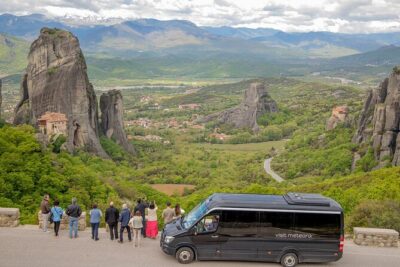
Meteora Monasteries, Caves & Coastal Stopovers with Lunch
Read our review →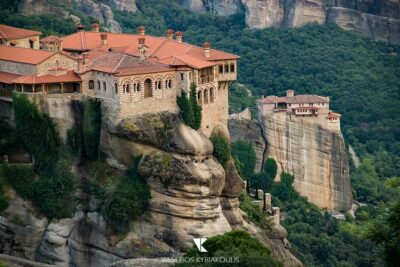
Meteora Monasteries & Caves DayTrip from Athens with Greek Lunch
Read our review →
4-Day Classical Greece Tour: Epidaurus, Mycenae, Olympia, Delphi, Meteora
Read our review →
Meteora Monasteries, Hermit Caves Tour with Pickup
Read our review →Browse the lists this tour appears in