
Reviewed · METEORA MONASTERIES TOURS
Meteora Small Group Hiking tour with Transfer and Monastery Visit
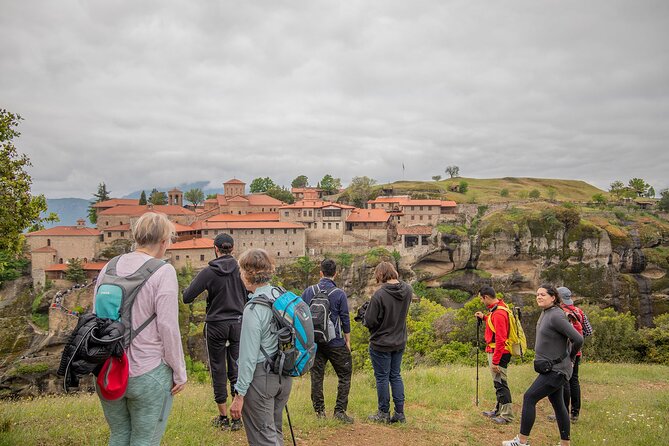
Meteora is best understood on foot. This four-hour morning trip takes you away from the main roads and into the rock forest, where enormous sandstone pillars, old paths, and cliff-top monasteries come together. You hike for about two hours, then visit Great Meteora and the smaller Ypapanti Monastery, with a minivan handling the road sections.
I like the mix of quiet natural trails and monastery history, rather than spending the whole morning in a vehicle. I also like the small maximum of 12 people, hotel pickup, and guides such as Chris, Christos, Evan, and Dimitris, who are praised for explaining geology, plants, animals, and local stories in an easygoing way.
The main caution is fitness. This is not a flat stroll. Several sections are manageable but active, and the route can feel harder after the monastery visit. You also pay a separate €5 entrance fee, and the strict clothing rules require planning.
Key points at a glance
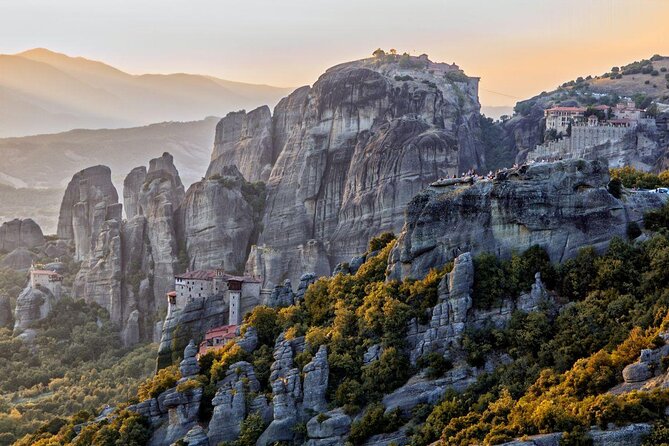
- Hidden trails through the rock forest: See Meteora from woodland paths and viewpoints that most bus tours skip.
- Two contrasting monasteries: Great Meteora is the largest and oldest, while Ypapanti is built inside a rock cavity.
- Small group of up to 12: The group size allows a more personal pace and easier questions for the guide.
- Useful local guiding: Guides explain monastic history alongside geology, plants, tortoises, and other local wildlife.
- Simple morning logistics: Pickup, drop-off, minivan transport, and bottled water are included from Kalambaka or Kastraki.
- Moderate physical effort: Comfortable hiking shoes and a reasonable level of fitness are essential.
Why hiking is the right way to see Meteora
Meteora covers only a few square kilometers, but it feels much larger once you leave the road. The area combines huge rock pillars with a centuries-old Orthodox monastic community, and the scale makes more sense when you walk beneath the cliffs rather than simply photograph them from a coach.
The setting has several layers of importance. Meteora is a UNESCO World Heritage Site, an archaeological site, and an officially declared holy place. Kalambaka and Kastraki sit below the rocks, making either town a practical base for this morning outing.
The hike follows lesser-used paths associated with the early monks who came to the area more than 15 centuries ago. You are not simply walking from a parking area to a monastery entrance. The route gives you time to notice the formations, changing viewpoints, woodland, and the relationship between the monasteries and the rocks that support them.
That is the tour’s strongest idea: the scenery is part of the story. The guide can connect a rock formation or old route with the people who lived here, rather than treating the monasteries as isolated monuments.
More Hiking Tours in Meteora
- Kalabaka: Meteora Small-Group Hiking Tour w/ Monastery Visit
★ 4.9 · 205 reviews - Hiking Tour to Meteora from Kalambaka – Local Agency
★ 5.0 · 73 reviews - Meteora: Sunset Hike to Secret Caves
★ 4.9 · 56 reviews
Starting at 8:30 from Kalambaka or Kastraki
The tour begins at 8:30 am, with pickup and return from hotels and Airbnbs in Kalambaka and Kastraki. That is especially handy if you are staying in one of the two settlements and do not want to arrange a taxi or find a trailhead yourself.
Transport is by air-conditioned minivan. The vehicle is used for the road portions, including access near the monastery area, while the main experience takes place on foot. Bottled water is included, but I would still bring additional water on a warm day, along with sun protection.
The small-group format matters here. A group capped at 12 is not private, but it is far easier to hear the guide and keep a shared pace than on a large coach excursion. It also makes spontaneous questions more realistic. Guides have helped people with local transport questions, lunch suggestions, and other practical matters, not just monastery facts.
The advertised duration is about four hours. The hiking portion is listed at two hours, Great Meteora at about one hour, and Ypapanti at about 30 minutes. Allow for some variation in timing, especially if the group needs extra rest stops or the monastery visit takes longer.
Through Meteora’s rock forest
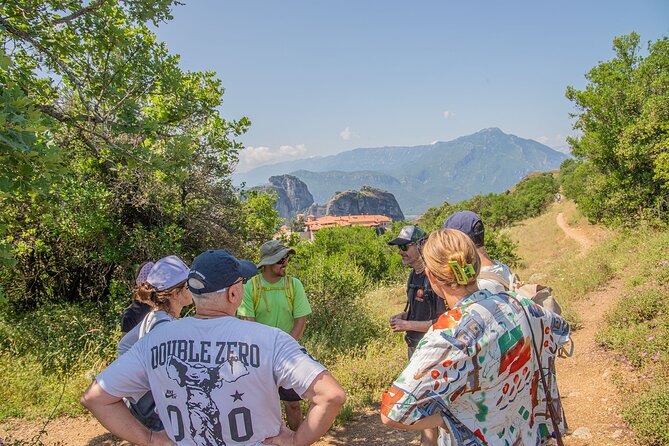
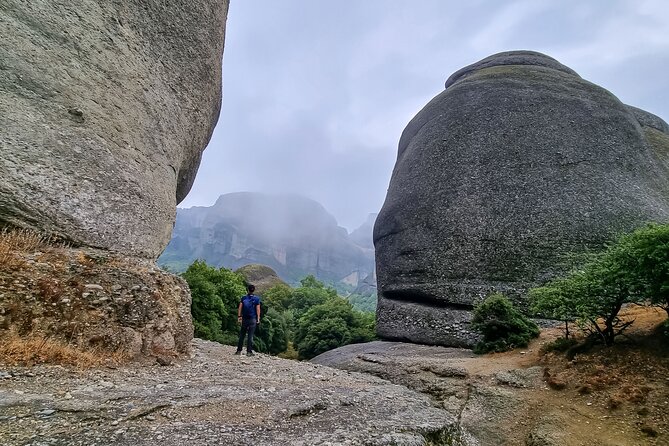
The hike is the heart of the experience. You walk through the forested lower slopes and between the giant rock pillars, seeing the monasteries from angles that are hard to appreciate from the main road.
The trail is described as manageable, but it still requires moderate fitness. One account puts the distance at about five miles, while other descriptions call the hike easy for active people and more demanding for anyone who has not walked regularly in years. Both points can be true. The route is not an extreme mountain expedition, but it includes uneven ground, uphill sections, and a more challenging stretch after the monastery visit.
Good guides adjust the pace. Chris and Christos are singled out for regular breaks, hydration checks, encouragement, and attention to different ability levels. Evan is also praised for explaining the sights while keeping the hike relaxed. That can make a real difference if you are walking with teenagers, older family members, or someone who is fit but not used to rocky trails.
The natural side adds plenty of interest. Guides have pointed out local plants, tortoises, and other fauna, giving you something to watch for between the grand viewpoints. The hike is not only a history lesson with a little exercise attached. It is also a gentle introduction to the plants and animals of the Meteora area.
Fog or cloud can reduce the long views, so weather affects the visual payoff. Even in poor conditions, the rock formations remain close and atmospheric, but you should not assume every morning will deliver clear views across the Thessalian plain.
Great Meteora, the monastery suspended above the rocks
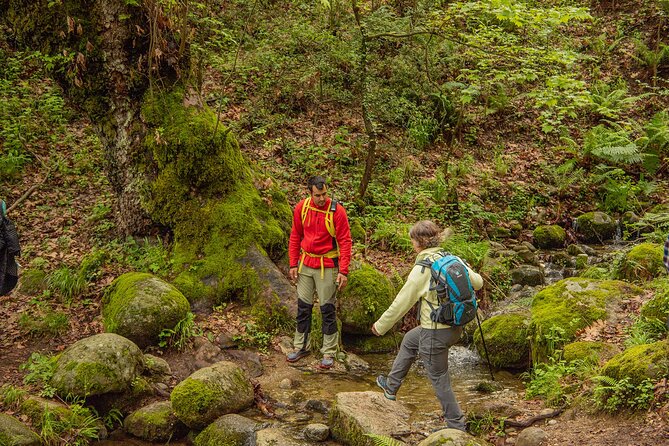
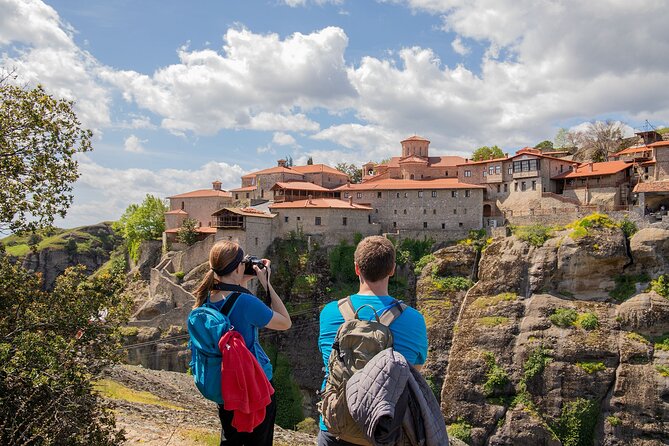
The Great Meteoron Monastery is the largest and oldest of Meteora’s monasteries. Its name comes from meteoro, meaning suspended in the air, a fitting description for a monastery perched on top of a massive rock pillar.
Its importance is not only visual. Saint Athanasios the Meteorite founded the monastery and organized a more systematic communal monastic life here. That foundation is considered a major turning point in Meteora’s organized monastic tradition.
The visit lasts about an hour, although the entrance fee is not included. The supplied tour information lists the fee as €5 per person. Bring cash or a payment method suitable for the local ticket arrangements, but do not treat the admission as part of the advertised $36.28 price.
Great Meteora is the famous name on the itinerary, and it deserves its place. You get the monumental setting, the strongest connection to Meteora’s organized monastic history, and the chance to see why these buildings were placed so high and so defensibly.
The drawback is that it is the most established stop. You may encounter more people here than on the hiking trails, and the visit involves stairs and monastery access rather than a quiet walk through untouched woodland. The tour works best because it pairs Great Meteora with the less familiar Ypapanti.
A few other Meteora mornings to price up
- Meteora Sunset with Monastery & Hermit Caves Tour in Small Group
★ 5.0 · 706 reviews - Meteora: Morning Half Day Sightseeing and Monasteries Tour
★ 4.7 · 478 reviews - Meteora: Guided Sunset Tour with Monasteries & Caves Visit
★ 4.7 · 409 reviews - Meteora: Majestic Sunset Tour & Monasteries with Local Guide
★ 4.7 · 359 reviews
Ypapanti Monastery inside a rock cavity
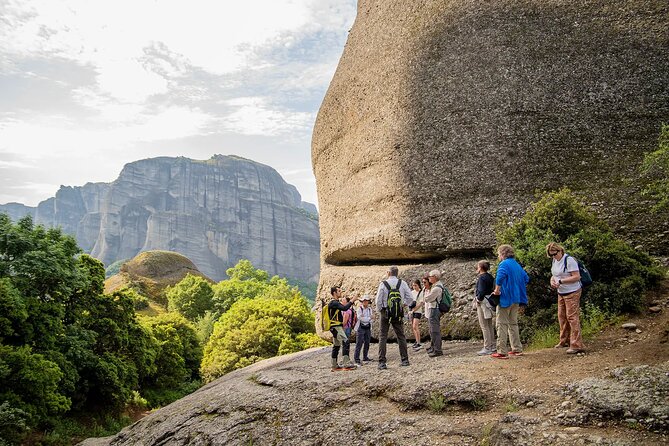
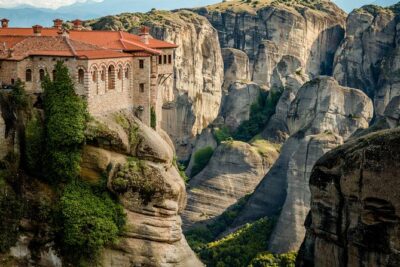
Ypapanti offers a very different experience. Instead of sitting prominently on a rock summit, it was constructed inside a large cavity in the rock. That unusual design makes it one of the most memorable parts of the route.
The monastery was founded in 1367 by two monks, Nilos and Cyprianus. It was destroyed in 1809 when the local rebel Papathymios Vlahavas was arrested there by the forces of Ali Pasha. The site’s setting gives those events a physical context: this was not merely a religious building, but a refuge shaped by the rock around it.
The path to Ypapanti is described as simple and pleasant, though the overall hike still requires care. The visit itself is listed at about 30 minutes, and admission is free. That makes it a useful contrast to Great Meteora, both in scale and in atmosphere.
I particularly like this stop for anyone who wants something less predictable than the standard monastery circuit. You see how monastic life adapted to the available stone, rather than only visiting the largest and most famous complex.
What you see beyond the two main visits
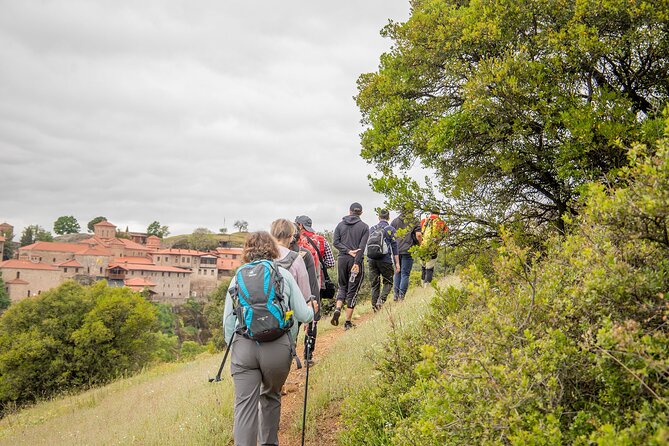
The route also brings you near other important monasteries, including Varlaam and Saint Nicholas of Anapafsas. The tour does not promise a full interior visit to every monastery, so set your expectations correctly.
Varlaam is the second-largest monastery and sits opposite Great Meteora. It was founded in the mid-14th century by the hermit Varlaam. Its main church, or katholikon, was built in 1541 and 1542 by two monk brothers from Ioannina, Theophanes and Nectarios Apsarades. The church was painted in 1548, with the wall paintings attributed on stylistic grounds to the Theban artist Frago Catelano.
Saint Nicholas of Anapafsas is the first monastery encountered on the road into Holy Meteora. It dates from the end of the 14th century. The name has several explanations, including the idea that its position made it a resting point for pilgrims before they continued uphill.
These monasteries add context even when you do not enter each one. You begin to see Meteora as a connected monastic area, not a collection of unrelated postcard views.
If you want to explore monastery interiors in detail, plan extra time on another day or before the hike. One useful approach is to combine this walking tour with independent visits to individual monasteries. The hike gives you the terrain and viewpoints, while a separate visit lets you spend longer inside the religious sites.
Guides who bring more than dates and names
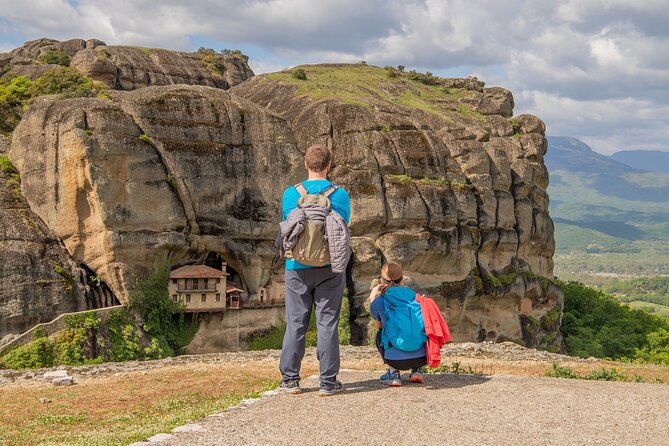
The guide can make or break a short outdoor tour, and this experience has a strong record in that department. Chris and Christos receive repeated praise for being calm, funny, patient, and well informed about the region. Evan is noted for clear explanations and a comfortable pace. Dimitris and Kristos are also praised for their local knowledge and personable manner.
The best part is the range of subjects covered. You can expect information about the monasteries and monks, but also about geology, local history, plants, and animals. That broader approach suits Meteora, where the rocks and the religious community are inseparable.
Christos, in particular, has been praised for checking hydration and safety, taking extra breaks, and encouraging people through the tougher sections. Chris is noted for answering questions about local transport and places to eat. These are small details, but they turn a fixed tour into useful time on the ground.
Guide assignments can change, so you should not book on the assumption that a particular person will lead your departure. Still, the repeated strengths are clear: good pacing, strong regional knowledge, humor, and attention to the group.
Price, group size, and what you really get
At $36.28 per person, this is a low-cost way to add structure to a Meteora visit. The price includes hotel pickup and drop-off in Kalambaka or Kastraki, air-conditioned minivan transport, an English-speaking mountain guide, bottled water, and the Ypapanti visit.
The extra €5 entrance fee is modest, but it should be included in your budget. The tour does not include every monastery entrance, so the low price reflects a focused hike and selected visits rather than an all-inclusive religious-site pass.
The value is strongest if you do not have a car or do not feel comfortable finding the trails alone. You are paying for trail access, transport, interpretation, and a planned route through a complex area. It is also a good fit if you want to avoid spending the entire morning in a vehicle.
A small group of no more than 12 keeps the price below a private tour while preserving some personal attention. If you want complete control over stops, pace, and photography time, a private arrangement may suit you better. For most people seeking a guided introduction, this is a sensible middle ground.
Clothing, shoes, and physical preparation
Wear proper hiking shoes with reliable grip. Comfortable everyday sneakers may be enough for some people, but the tour specifically calls for appropriate hiking footwear, and the trail conditions can change.
The monasteries enforce a strict dress code. Men need trousers and long sleeves. Women need a long skirt. If you arrive in shorts, trousers and skirts are provided, but it is more comfortable and respectful to dress correctly before pickup.
The activity requires moderate physical fitness. If you walk regularly, you may find the hike a pleasant workout. If you have not hiked for years, have knee problems, or are unsure about uneven uphill paths, take the fitness warning seriously. The pace includes breaks, and people with different ability levels have completed the route, but no guided break removes the need for steady footing.
Good preparation is simple: wear hiking shoes, bring water, dress for changing conditions, and avoid carrying a heavy bag. The early start also helps you make the most of the cooler part of the day.
Who should book this Meteora hike?
I would choose this tour if you want to see Meteora from below and between the rocks, not only from monastery car parks. It suits active couples, families with older children, solo visitors who want company, and anyone staying in Kalambaka or Kastraki without a vehicle.
It is especially useful for first-time visitors who want the guide to explain how the monasteries, geology, and local ecology fit together. The tour also works well as one part of a longer stay, paired with separate monastery visits.
I would think twice if your priority is visiting as many monastery interiors as possible. The tour covers a good portion of the area, but it is not a full monastery-by-monastery circuit. I would also reconsider it if you want a completely gentle walk or have serious mobility limits.
Bad weather may change the format. At least one departure was switched from hiking to a bus tour because of rain, allowing the group to see more monasteries by road. That can be a useful backup, but you should understand that the central appeal of this product is walking the trails.
Cancellation is free up to 24 hours before the start time. Cancellations or changes made inside that window are not accepted for a refund.
FAQ
Where does the Meteora hiking tour begin?
The tour starts at 8:30 am, with pickup from hotels and Airbnbs in Kalambaka or Kastraki village.
How long does the tour last?
The experience lasts about four hours. The hiking portion is approximately two hours, followed by visits to Great Meteora and Ypapanti Monastery.
Is transportation included?
Yes. Round-trip pickup and drop-off from Kalambaka or Kastraki, along with transport in an air-conditioned minivan, are included.
Are monastery entrance fees included?
No. The tour information lists an entrance fee of €5 per person. Ypapanti Monastery admission is free.
What should I wear to the monasteries?
Men must wear trousers and long sleeves. Women must wear a long skirt. If you arrive in unsuitable clothing, trousers and skirts are provided.
How many people are in the group?
The tour has a maximum of 12 participants. An English-speaking local mountain guide leads the experience.
Should you book it?
Yes, if you want the most active and natural introduction to Meteora without paying for a private tour. The combination of quiet trails, Great Meteora, unusual Ypapanti, local transport, and strong guiding makes the $36.28 price good value, even with the separate €5 entrance fee.
Book it with hiking shoes, realistic expectations about the five-mile-level effort, and clothing that meets monastery rules. If you want every monastery interior, add another half-day on your own. If you want to understand why Meteora feels so extraordinary, this guided walk is the better first step.
More Private Drivers in Meteora
- Meteora Tour: Monasteries, Lunch & Optional Athens Transfer
★ 5.0 · 104 reviews - Meteora: Monasteries Tour, Lunch, and Athens Transfer Option
★ 4.8 · 102 reviews - Meteora: Monasteries Tour with Lunch and Athens Transfer Option
★ 5.0 · 64 reviews - Athens Airport Private Arrival Transfer with Meet & Greet
★ 4.5 · 1,495 reviews
More Hikes in Meteora
- From Chania: Full-Day Samaria Gorge Trek Excursion & Guide
★ 4.6 · 3,191 reviews - From Rethymno: Samaria Gorge Full-Day Trek, Pickup & Guide
★ 4.5 · 1,610 reviews - From Chania/Rethymno: Samariá Gorge Guided Hike with Pickup
★ 4.5 · 1,010 reviews - From Chania: Samaria Gorge with Professional Hiking Guide
★ 4.6 · 720 reviews
Fresh on the Meteora list
- Sunset Meteora Tour on E-Bike★ 5.0 · 46 reviews
- Private Tour: Meteora Tour with Transport from Kalambaka★ 5.0 · 50 reviews
- Meteora Motorized or Footlaunch Flight Experience★ 5.0 · 54 reviews
- Meteora Sunset Tour on E-bikes★ 5.0 · 54 reviews
- Meteora: Guided Sunset Tour with Monasteries and Caves Visit★ 5.0 · 58 reviews
- Meteora: Monasteries Tour with Lunch and Athens Transfer Option★ 5.0 · 64 reviews
- From Athens:Meteora Caves & Monasteries History Day Trip by Train★ 4.5 · 70 reviews
- Kalabaka: Meteora Monasteries Minibus Tour with Photo Stops★ 5.0 · 74 reviews
Meteora Monasteries Tours, compared.
Meteora Monasteries Day Trip with Caves and Lunch
Read our review →
Meteora Tour with Local Guide and Greek Lunch
Read our review →
Meteora Monasteries, Caves & Coastal Stopovers with Lunch
Read our review →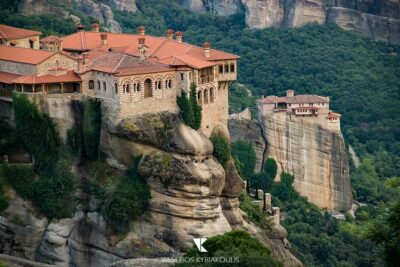
Meteora Monasteries & Caves DayTrip from Athens with Greek Lunch
Read our review →
4-Day Classical Greece Tour: Epidaurus, Mycenae, Olympia, Delphi, Meteora
Read our review →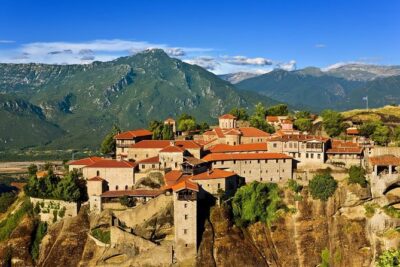
Meteora Monasteries, Hermit Caves Tour with Pickup
Read our review →Browse the lists this tour appears in