
Reviewed · METEORA MONASTERIES TOURS
Meteora Sunset with Monastery & Hermit Caves Tour in Small Group
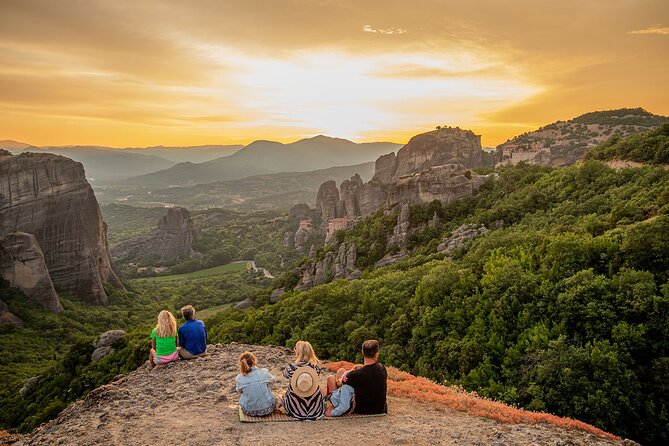
Meteora is at its most magical when the huge stone pillars turn gold and the monasteries seem to float above the plain. This small-group tour gives you that sunset view, but it also explains how monks first lived in caves before building monasteries on the cliffs.
I like the easy hotel pickup from Kalambaka or Kastraki, and I like the mix of major sights with less obvious places such as the hermit caves. Guides including Lina, Jim, Maria, and Dimitri are praised for lively stories about geology, monks, war, and local life. The main drawback is timing: in summer, a sunset tour can run well past the advertised four hours.
Key points to know before you book
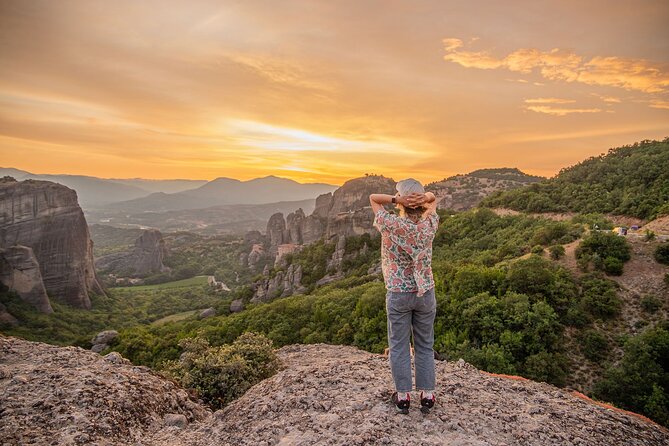
- Saint Stephen’s Monastery is the only monastery you enter, and its bridge access makes it the easiest choice for visitors who want to avoid long stairways.
- The hermit caves add something different from a standard monastery circuit, showing where solitary monks lived before organized monastic life developed.
- The Byzantine Church of the Assumption contains 11th-century frescoes, an older mosaic floor, and stones taken from an ancient temple to Apollo.
- Sunset timing changes with the season, so the four-hour estimate is not a firm end time, especially in June.
- Bring cash for entrance fees, since the monastic sites do not accept cards. The listed Meteora admission fee is €7 per booking.
- The group is capped at 18 people, with transportation by minibus and pickup from hotels or Airbnbs in Kalambaka and Kastraki.
Why this sunset tour works well at Meteora
Meteora is not just a collection of monasteries. It is a small UNESCO World Heritage area where giant rock pillars rise from the Thessalian plain, with Kalambaka and Kastraki at their feet. The setting can feel almost unreal, but the place becomes more meaningful once you understand why people came here and how they managed to live on the rocks.
That context is the chief reason I would choose a guided tour instead of simply driving from monastery to monastery. A guide can point out the old hermit dwellings, explain the change from solitary life to organized monastic communities, and connect the monasteries with Byzantine and Ottoman rule, World War II damage, and postwar rebuilding.
You ride in a small minibus rather than trying to fit every sight into a large coach outing. The group can include up to 18 people, so do not expect a private tour, but the size is manageable. Pickup and return are offered at hotels and Airbnbs in Kalambaka and Kastraki, which saves you from arranging a taxi or finding the starting point at Patriarchou Dimitriou 2.
The English-speaking guide does the main explaining. A free smart audio guide is available in Spanish, French, German, Italian, Portuguese, Russian, Polish, Korean, Chinese, and Japanese. If you are booking because of the language option, note the difference: the live tour itself is in English, while the additional languages come through the app and may not offer the same depth or flexibility as a guide answering questions in person.
A few other Meteora mornings to price up
- Meteora Small Group Hiking tour with Transfer and Monastery Visit
★ 5.0 · 484 reviews - Meteora: Morning Half Day Sightseeing and Monasteries Tour
★ 4.7 · 478 reviews - Meteora: Guided Sunset Tour with Monasteries & Caves Visit
★ 4.7 · 409 reviews
Starting among the rocks and villages
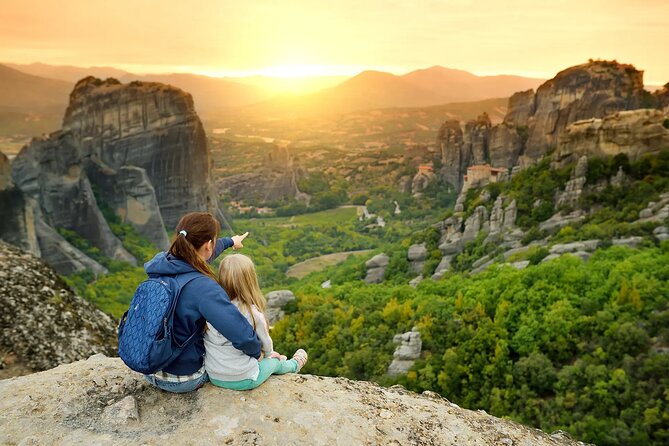
The first part of the outing introduces the Meteora area itself. This is useful orientation, especially if you have arrived late in the day or have not yet explored the region. You will begin to understand the relationship between the rock pillars, the monasteries, and the two settlements below, Kalambaka and Kastraki.
The tour uses the road system around the rocks, with stops for views and photographs. You are not signing up for a long stair climb through several monasteries. That makes this a good afternoon choice after a morning spent visiting other sites on foot.
I especially like the way the tour adds the story of the hermits. The caves are not simply scenic holes in the rock. They help explain the earliest form of religious life here, when individual ascetics sought isolation in difficult places. Later, monastic communities became more organized, and the larger monasteries grew into the centers you see today.
The guide commentary is an important part of this stop. Guides such as Jim have been praised for combining geology and history with stories, rather than giving you a long string of dates. Lina is also noted for explaining the lives of monks, nuns, and the communities that formed around the monasteries.
The Byzantine Church and its unusual walls
In Kalambaka, the Byzantine Church of the Assumption of the Virgin Mary gives you a close look at religious art and building history without the scale of the cliff monasteries. Allow about 30 minutes here.
The church is important for its age and its 11th-century Byzantine frescoes. Look closely at the walls, because stones from an ancient Greek temple dedicated to Apollo were reused in the building. That detail gives the church an unusual link between ancient pagan Greece and later Christian worship.
You can also see parts of an older mosaic floor beneath the present one. The remains are revealed in specific areas, so listen to the guide and pay attention to the floor rather than expecting a fully exposed mosaic.
This is an active local church, not only a historic monument. That matters because you are seeing a place that still has a role in community life. The admission fee is not included, and you should carry cash. One practical point deserves emphasis: the entrance arrangements are handled directly at the religious sites, and cards are not accepted.
Some people may find 30 minutes here longer than expected, particularly if their main goal is the sunset. I would treat the church as a history stop rather than a quick photo break. Its value comes from details that are easy to miss if you are touring alone.
Saint Stephen’s Monastery without a long stair climb
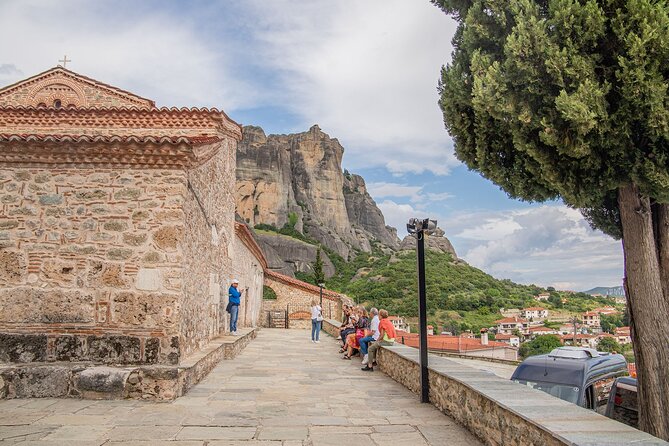
Saint Stephen’s is the monastery you visit inside. It is also the most accessible of the Meteora monasteries because you cross a small bridge to reach the entrance instead of climbing a long series of steps.
That makes the stop especially helpful if you have limited comfort with stairs. It also gives you a real monastery visit without committing the whole afternoon to strenuous access routes. You should still expect some walking, uneven surfaces, and the need to dress properly.
The monastic presence on this rock reaches back to the early 12th century. Hosios Antonios is associated with the early period, while Hosios Philotheos rebuilt the small church, or catholicon, in 1545. The monastery’s history is therefore much older than the visible buildings alone suggest.
Allow about 30 minutes inside. You will have time to see the religious spaces and take in the setting, but this is not an extended study visit. The English guide provides the main background, while a state-licensed guide inside the monastery is not included.
The dress code is strict. Men need trousers and long sleeves. Women need a long skirt. If you arrive in unsuitable clothing, trousers and skirts are provided, but I would not rely on borrowed garments as your first plan. Wear modest clothing from the start, particularly if you are combining this tour with other sightseeing.
Saint Stephen’s is closed on Mondays. On that day, the tour visits Saint Nicholas or Roussanou instead. Check the day of your booking carefully, since the substitute monastery may involve different access conditions.
Same island, an entirely different sort of day:
- Meteora: Majestic Sunset Tour & Monasteries with Local Guide
★ 4.7 · 359 reviews - Meteora Monasteries Half-Day Small Group Tour with Transport
★ 5.0 · 339 reviews - Meteora: Panoramic Morning Small Group Tour with Local Guide
★ 4.7 · 334 reviews - Meteora Panoramic Morning Small Group Tour with Local Guide
★ 5.0 · 311 reviews
Hermit caves and the older life of Meteora
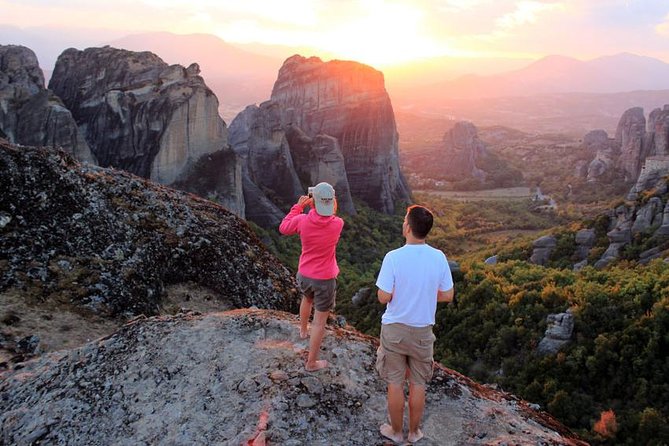
The hermit caves are one of the strongest reasons to choose this particular outing. Many standard visits focus on the famous monasteries, but the caves give you a sense of the rough beginnings of monastic life here.
Your guide can show where solitary monks lived before the larger communities took shape. The setting makes their choice clear: these are places of isolation, reached and occupied under conditions far removed from modern comfort.
This stop also helps you read the monasteries differently. After seeing the caves, the great buildings no longer seem like isolated sights on a driving route. You can understand them as the later stage of a long religious tradition that began with individuals seeking solitude and gradually developed into organized communities.
The caves are not presented as a strenuous hike in the tour description, but you should expect some walking at scenic stops. Good shoes are sensible, and the weather can change quickly around the rocks. Bring a light layer for the sunset portion, since one outing was described as chilly even though the rest of the experience worked well.
Seeing the famous monasteries from the road
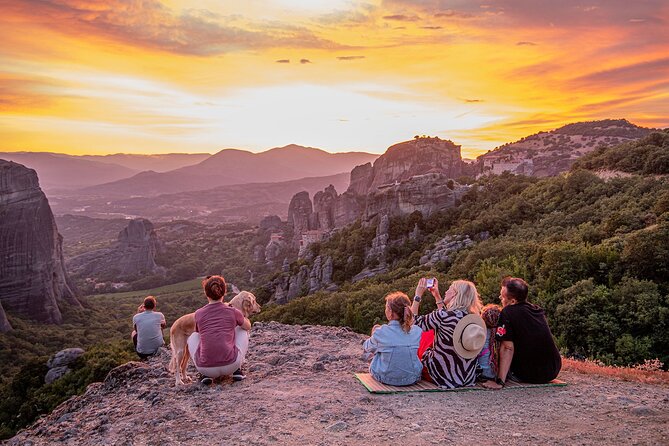
The tour includes views and explanations of the Great Meteoron, Roussanou, and Varlaam monasteries. You do not enter all of them on this outing, but seeing them from the surrounding roads and viewpoints gives you a useful sense of how the monastic complex fits together.
The Great Meteoron is the largest and oldest monastery. Its name refers to the idea of being suspended in the air, an apt description for a building placed on top of one of Meteora’s giant rock pillars. Saint Athanasios the Meteorite founded it and organized a more systematic communal form of monastic life.
Varlaam, opposite Great Meteoron, is the second largest monastery. It was founded in the mid-14th century by the ascetic Hosios Varlaam. Its main church was built in the 16th century by the brothers Theophanes and Nectarios Apsarades and decorated with wall paintings attributed to the Theban artist Frago Catelano.
Roussanou sits on a lower rock, so it is more accessible than some of the other monasteries. It was first founded by monks and became a convent in 1988. The main church dates from the late 16th century, and the site suffered serious damage during World War II.
These details are valuable even when you are looking from outside. You get the broad picture without spending the entire tour climbing steps or waiting at every entrance. If you want to explore the interiors of Great Meteoron, Varlaam, and the other monasteries, plan a separate morning or another day.
That is one of the best ways to use this tour. Visit some monasteries independently earlier in your stay, then use the sunset outing to fill in the missing pieces with Saint Stephen’s, the church, the caves, and the stories connecting everything.
Sunset from a quieter viewpoint
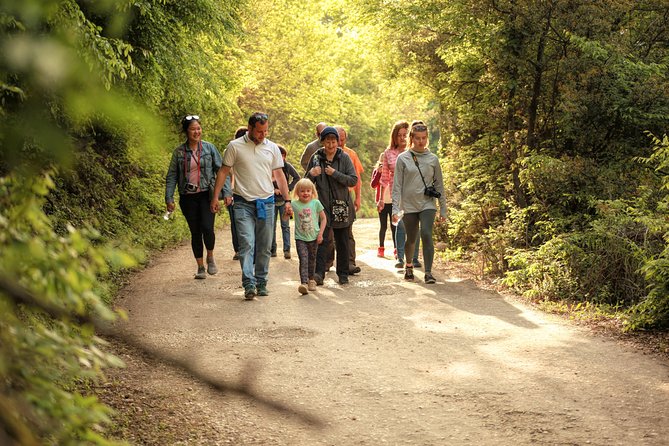
The final scenic stop is chosen for sunset rather than for the most famous postcard angle. That can be a relief at busy times, when the best-known overlooks fill quickly.
The payoff depends on the weather. Clouds can block the sun, but they can also create the most dramatic colors. One outing ended with rain and then a break in the clouds that produced a remarkable sunset. You cannot book a guaranteed sky, but the timing gives you a good chance to see Meteora in its best evening light.
Bring a jacket, even in warmer months. The tour may feel mild while you are moving between stops, then cooler when you stand still at the viewpoint. Your guide and driver may also help with photographs, a small but useful service when you want a picture of the whole group.
The sunset stop is also where the timing issue matters most. In June, the sun sets late, and the tour may not return until around 9:30 p.m. The stated duration is approximately four hours, but you should treat that as a rough guide rather than a fixed appointment. If you have a train, dinner booking, or evening transfer, leave plenty of room.
What the $36.28 price buys you
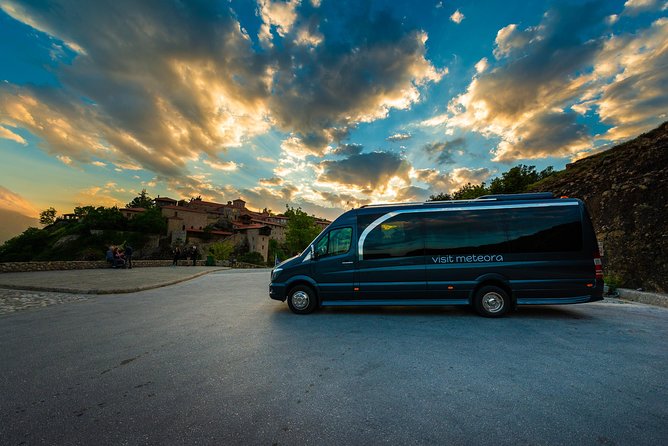
At $36.28 per person, this is a strong value if you want transportation, orientation, and sunset views without renting a car. Hotel pickup and drop-off in Kalambaka or Kastraki add real convenience, particularly if you are staying outside the immediate meeting point.
The price includes bottled water, transport, the English-speaking tour, the church visit, the hermit caves, and entry to Saint Stephen’s according to the tour details. The €7 Meteora admission fee is listed separately, and food and drinks are not included.
The small-group format matters more here than it might in an ordinary city tour. Meteora involves narrow roads, viewpoints, and a series of stops spread across a compact but dramatic area. A minibus with no more than 18 people keeps the outing easier to manage than a large coach.
Still, this is not a private experience. If you want to stop whenever you wish, spend an hour inside a single monastery, or set your own sunset position, a private guide or self-drive plan would give you more control. You are paying for a well-organized overview, not complete independence.
Who should choose this Meteora outing?
I would choose it if you have only one afternoon in Meteora, arrive later in the day, or want a guide to connect the caves, churches, monasteries, and geology. It also suits you if long stairways are a concern, since Saint Stephen’s is reached by a bridge and the tour is not built around repeated climbs.
It is a good fit for history-minded visitors who enjoy stories. Guides including Maria, Apostolou, Apostle, Jim, Lina, and Dimitri are praised for clear explanations, humor, local insight, and strong storytelling. The exact guide is not guaranteed, but the format puts live commentary at the center.
You may want a different plan if your priority is entering several monasteries. This tour visits one monastery inside and provides views and background for the others. It is also less suitable if you need a firm four-hour schedule, especially in late spring and summer.
Free cancellation is available up to 24 hours before the start time. The experience depends on good weather and a minimum number of participants. If the operator cancels for either reason, you are offered another date or experience, or a full refund.
Should you book it?
Book this tour if you want a well-paced introduction to Meteora with easy transport, one accessible monastery interior, a historic church, hermit caves, photo stops, and a sunset viewpoint. At $36.28, it offers a lot for the price, especially if you do not have a car.
I would pair it with independent visits to the other monasteries on another morning. Bring cash, dress for the church and monastery rules, wear sensible shoes, and do not schedule anything tight after the tour. If you can accept the changing end time, this is an efficient and engaging way to understand why Meteora is more than a set of beautiful photographs.
FAQ
How long does the Meteora sunset tour last?
The tour lasts approximately four hours, but the actual duration can vary with the season and sunset time. In June, it may return as late as around 9:30 p.m.
Where does pickup take place?
Pickup and drop-off are available from hotels and Airbnbs in Kalambaka and Kastraki. The listed meeting point is Patriarchou Dimitriou 2 in Kalambaka.
Which monastery do I visit inside?
The tour includes an interior visit to Saint Stephen’s Monastery. It is reached by crossing a small bridge rather than climbing a long flight of steps.
What happens when Saint Stephen’s Monastery is closed?
Saint Stephen’s is closed on Mondays. On Mondays, the tour visits Saint Nicholas Monastery or Roussanou Monastery instead.
Is the tour offered in Spanish or other languages?
The live tour is guided in English. A free audio guide is available in Spanish, French, German, Italian, Portuguese, Russian, Polish, Korean, Chinese, and Japanese.
What should I wear to the monasteries?
Men must wear trousers and long sleeves. Women must wear a long skirt. Trousers and skirts can be provided at the monasteries if your clothing does not meet the dress code.
Are entrance fees included?
The tour details list a €7 Meteora admission fee separately. Bring cash, since entrance payments at the monastic sites are not accepted by card. Food and drinks are also not included.
Fresh on the Meteora list
- Sunset Meteora Tour on E-Bike★ 5.0 · 46 reviews
- Private Tour: Meteora Tour with Transport from Kalambaka★ 5.0 · 50 reviews
- Meteora Motorized or Footlaunch Flight Experience★ 5.0 · 54 reviews
- Meteora Sunset Tour on E-bikes★ 5.0 · 54 reviews
- Meteora: Guided Sunset Tour with Monasteries and Caves Visit★ 5.0 · 58 reviews
- Meteora: Monasteries Tour with Lunch and Athens Transfer Option★ 5.0 · 64 reviews
- From Athens:Meteora Caves & Monasteries History Day Trip by Train★ 4.5 · 70 reviews
- Kalabaka: Meteora Monasteries Minibus Tour with Photo Stops★ 5.0 · 74 reviews
Meteora Monasteries Tours, compared.
Meteora Monasteries Day Trip with Caves and Lunch
Read our review →
Meteora Tour with Local Guide and Greek Lunch
Read our review →
Meteora Monasteries, Caves & Coastal Stopovers with Lunch
Read our review →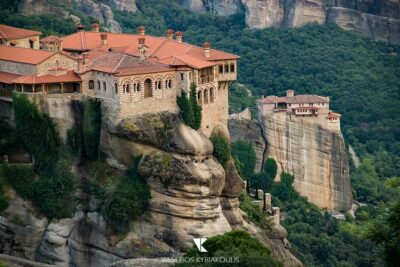
Meteora Monasteries & Caves DayTrip from Athens with Greek Lunch
Read our review →
4-Day Classical Greece Tour: Epidaurus, Mycenae, Olympia, Delphi, Meteora
Read our review →
Meteora Monasteries, Hermit Caves Tour with Pickup
Read our review →Browse the lists this tour appears in