
Reviewed · METEORA MONASTERIES TOURS
From Athens: 4-Days Classical Tour with Meteora
The best thing about this four-day trip is the sheer sweep of it. You move from the Corinth Canal and Mycenae to Olympia, Delphi, and the cliff-top monasteries of Meteora, seeing how Greek culture changed from prehistory through the classical, Roman, Byzantine, and modern eras. It is a lot of ground, but the route is sensibly broken into four days.
I like the way the tour combines famous archaeological sites with big views and small-town stops. I also like the practical package: a luxury air-conditioned coach, entrance fees, breakfast, dinner, and hotel nights are included. The tradeoff is clear: you will spend long stretches on the road, and the standard hotels and buffet dinners may feel basic unless you choose the upgrade option.
Key points to know before booking
- Four major ancient sites in four days: Visit Epidaurus, Mycenae, Olympia, and Delphi, then finish among the monasteries of Meteora.
- Meteora provides the visual climax: Huge rocks and Byzantine monasteries make this final stop very different from the classical ruins earlier in the trip.
- The coach keeps the route simple: Transport, a professional guide, Wi-Fi, entrance fees, and overnight accommodation are included.
- The itinerary is busy but well paced: Most drives are broken into manageable sections, though this is not a slow, free-form holiday.
- Hotel choice matters: The upgrade option received strong praise, while the non-upgraded accommodation drew less favorable comments.
- Three guide languages are offered: You can book with live guiding in English, French, or Italian.
Why this route works for a four-day Greek trip
At $711 per person, this is not a budget bus ride, but it covers a substantial amount of Greece. You are paying for four days of transport, a professional guide, three nights of accommodation, breakfasts, dinners, archaeological entrance fees, and the convenience of returning to Athens without arranging several separate journeys.
I see the main value in the route itself. Reaching Delphi and Meteora independently from Athens takes planning, and combining them with the Peloponnese is difficult by public transport. Here, the coach carries you across central Greece while the guide explains what you are seeing.
The tour is also useful if you want a broad first look at mainland Greece. It does not give you long free periods at each place, but it connects the major chapters neatly. You begin with Mycenaean Greece, move through the Olympic tradition and classical religion, then finish with Byzantine monasteries and the dramatic rocks of Meteora.
The format suits you best if you prefer a fixed plan and do not want to change hotels every night on your own. It suits you less if you want quiet mornings, long museum visits, or time to wander each town without watching the clock.
A few other Athens mornings to price up
- Athens: Meteora Monasteries Day Trip with Caves and Lunch
★ 4.7 · 2,964 reviews - Athens: Meteora Monasteries Day Tour with Lunch
★ 4.8 · 2,196 reviews - Athens: Meteora Tour with Local Guide and Greek Lunch
★ 4.8 · 1,561 reviews
Day 1: Epidaurus, Nafplio, Mycenae, and Olympia
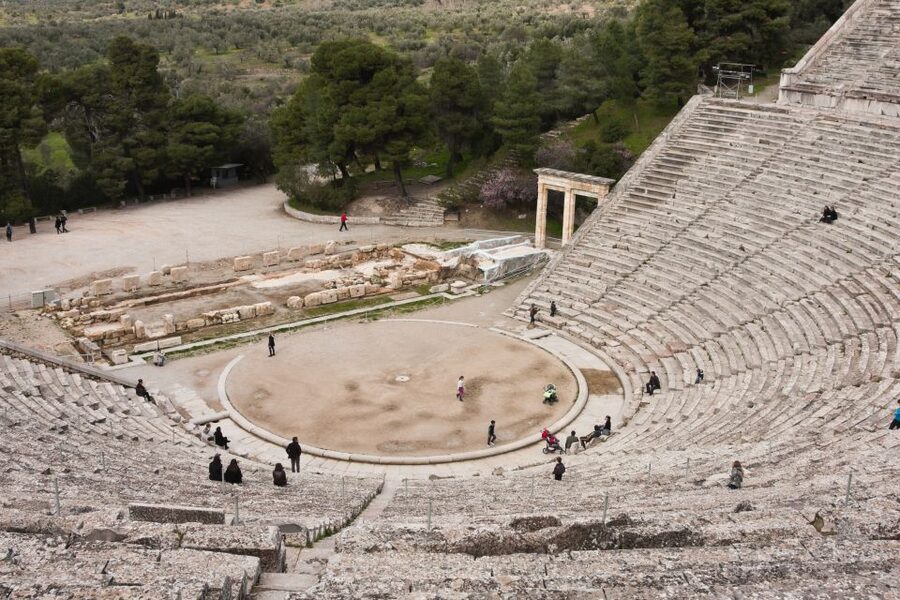
The first day heads along the coastal road to the Corinth Canal. The stop is short, but the canal gives you an immediate sense of the route ahead: this narrow cut links the Gulf of Corinth with the Saronic Gulf and separates the Peloponnese from mainland Greece.
You then continue to Epidaurus, best known for its ancient theater. The theater is famous for its remarkable acoustics, and your guide should help you appreciate why the building matters beyond its pretty stone rows. This is one of those places where the setting and design work together. Even with a short visit, it is easy to understand why the theater remains one of the highlights of the day.
Next comes Nafplio, where the program allows only a short photo stop. Nafplio is one of Greece’s most attractive historic towns, but this tour does not give you time to explore its streets, waterfront, or fortifications at length. Think of the stop as a quick introduction rather than a full visit.
The main archaeological stop is Mycenae. Here you visit the ancient site and the Tomb of Agamemnon, also called the Treasury of Atreus. Mycenae takes you well before the classical age, into the world of the Mycenaean civilization and the stories linked to Agamemnon and the Trojan War.
The site is valuable because it gives the tour an early starting point. You are not simply seeing one famous ruin after another. You are following a timeline, beginning with a fortified Bronze Age center before moving to later Greek religious and sporting sites.
After Mycenae, the coach crosses the central Peloponnese through Tripolis and Megalopolis on the way to Olympia. This is a long travel day, so expect the road time to matter. The benefit is that you reach Olympia without arranging another transfer, but you will have limited energy for anything beyond dinner and rest.
You spend the night in Olympia, the birthplace of the ancient Olympic Games. Dinner is included, which helps after a full day, though the exact menu depends on the hotel. The standard dinner arrangement is buffet style, and you may find it more practical than distinctly Greek in flavor.
Day 2: Ancient Olympia and the road to Delphi
The second morning is devoted to Olympia. You visit the archaeological site, including the Sanctuary of Olympian Zeus and the ancient stadium. You also see the place where the flame for the modern Olympic Games is lit, linking the ancient festival with the modern international event.
The Archaeological Museum adds needed context. Ruins can be hard to read without objects, sculpture, and architectural fragments nearby, so the museum helps make sense of what you see outdoors. Your guide is especially useful here, since the site covers several functions and periods rather than one single monument.
Olympia is one of the tour’s strongest stops because it combines sport, religion, architecture, and modern symbolism. You are not just looking at a stadium. You are seeing the sanctuary where athletic contests were tied to worship of Zeus, then visiting the location associated with the modern Olympic flame.
After Olympia, the route moves through the plains of Ilia and Achaia toward the Corinthian Bay. The major engineering sight is the bridge from Rion to Antirion. It carries the coach across the water and adds a modern counterpoint to the ancient sites.
The route then passes Nafpaktos, also known as Lepanto, and Itea before reaching Delphi. These are primarily passing views rather than extended visits. You should expect to see the towns from the coach or during brief pauses, not explore them in detail.
The drive is one reason this tour feels efficient but busy. It connects areas that are spread across mainland Greece, and the coach makes that possible in a comfortable way. Still, you should bring water, keep your day bag handy, and use the stops well. Lunch and drinks are not included, so budget for them each day.
You spend the night in Delphi, with dinner included. Arriving the evening before the site visit is helpful. It means you can begin at Delphi in the morning instead of making the long journey from Athens on the same day.
Day 3: Delphi, the ancient oracle, and Kalambaka
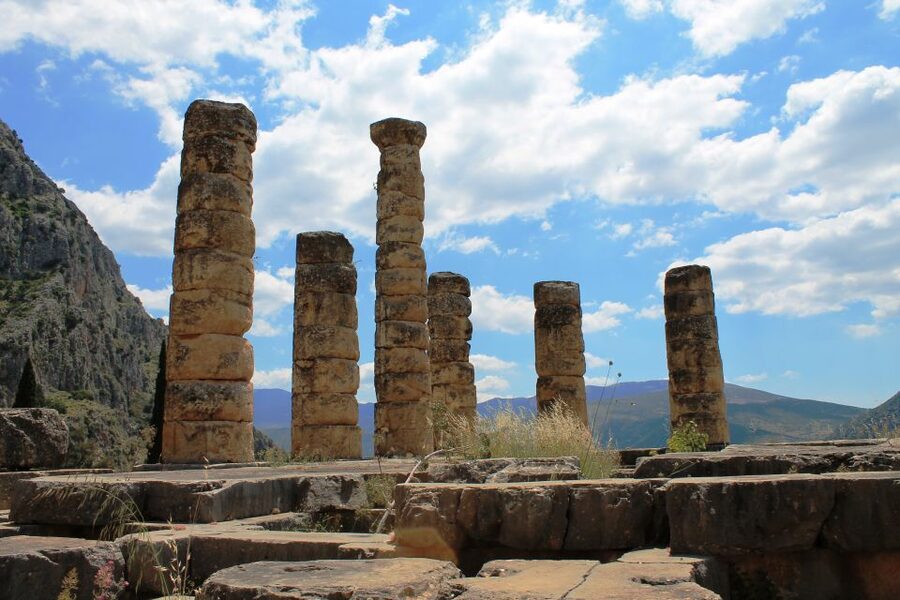
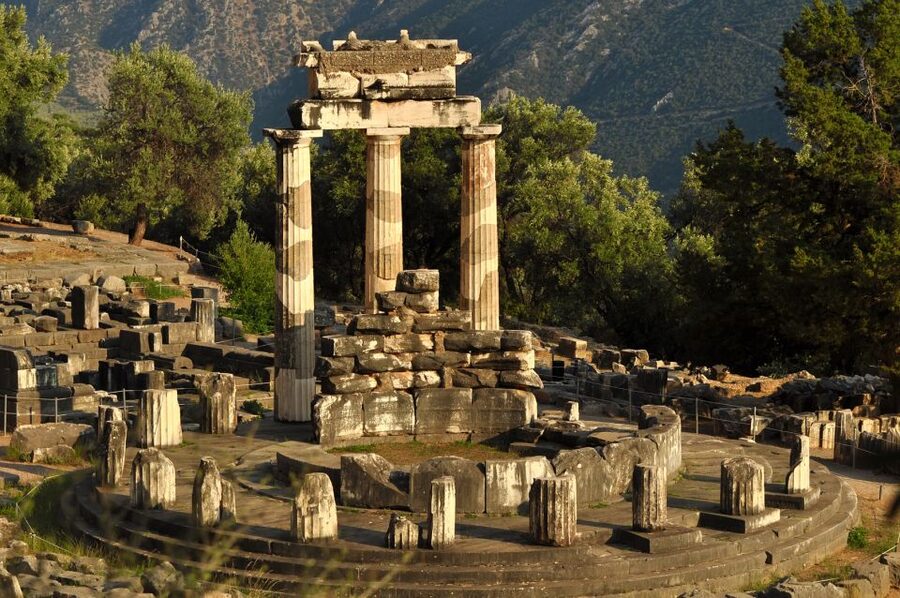
Delphi is the intellectual and spiritual center of the trip. In the ancient world, people came to consult the oracle, and the site became one of Greece’s most important religious centers. You visit both the archaeological site and the museum, giving you outdoor ruins and indoor collections in one morning.
The location is part of Delphi’s power. The sanctuary sits on the slopes of Mount Parnassus, and the setting helps explain why this place carried such weight in ancient Greek thought. The ruins are more than isolated stones. They show how pilgrims moved through a sacred complex and how monuments were placed to command attention.
The museum is important because it gathers sculpture and other remains from the sanctuary. As at Olympia, the guide can help connect the museum pieces to the buildings outside. The exact amount of time at each part depends on the group and the day’s schedule, so do not expect an unhurried museum study.
After Delphi, you leave for Kalambaka. The town sits at the foot of Meteora, surrounded by enormous rock formations. This transition is one of the tour’s most striking moments. The first two days focus mainly on ancient Greece, while the final section brings you into a setting shaped by Byzantine religious life.
Kalambaka is an overnight base rather than the main attraction. Dinner and accommodation are included, and arriving here the night before your Meteora visit makes the final day much more practical.
The accommodation level deserves attention. One booking may use a standard hotel category, while an upgrade option may offer a four-star property. The upgrade received particularly strong praise, and the non-upgraded hotels were less warmly received. If comfort matters to you, ask carefully what hotel category your price includes before booking.
Same island, an entirely different sort of day:
- Athens: Acropolis & up to 5 Archaeological Sites Combo Pass
★ 4.4 · 12,619 reviews - Athens: Acropolis Ticket with Optional Audio or Live Guide
★ 4.2 · 11,055 reviews - Athens: Acropolis, Parthenon & Acropolis Museum Guided Tour
★ 4.8 · 9,316 reviews - Athens: Cape Sounion & Poseidon Temple Sunset Half-Day Trip
★ 4.8 · 8,241 reviews
Day 4: Meteora monasteries and the return to Athens
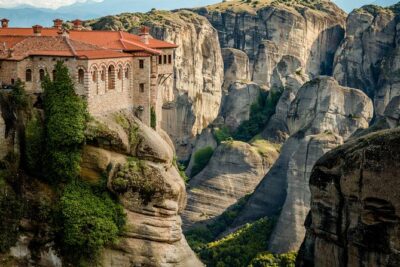
Meteora is the visual high point of the trip. Monasteries perch on towering rocks that appear to hang above the town, creating a scene unlike anything earlier in the itinerary. The rocks are not just a backdrop. They explain why monks sought these difficult, isolated locations.
The visit focuses on the monasteries and their Byzantine art. You can expect religious paintings, icons, and architectural details that show a different side of Greek culture from the temples and theaters of the Peloponnese.
Meteora also gives the itinerary a wider time span. The tour begins with prehistoric Mycenae, moves through the classical sanctuaries of Epidaurus, Olympia, and Delphi, and finishes with the Byzantine period. That chronological sweep is one of the best reasons to choose this particular route.
The final drive returns to Athens through Trikala, Lamia, and Thermopylae. At Thermopylae, there is a short stop to see Leonidas’s Monument across the road. It is a brief historical pause rather than a full visit, but it gives the return journey a memorable final marker.
The coach reaches Athens early in the evening and returns to the meeting point. Since the starting and ending point may vary by the option you book, check the exact meeting instructions before setting out.
The coach, guide, and daily rhythm
The luxury air-conditioned coach is important here. Four days of driving through the Peloponnese and central Greece would be tiring without organized transport, and the coach removes the need to navigate unfamiliar roads or arrange separate tickets.
Free Wi-Fi on the bus is a useful extra, though you should still treat the journey as travel time rather than office time. Roads, signal, and the pace of the group can affect how much you accomplish online.
The guiding is available in English, French, and Italian. Guide names reported for different departures include Georgia Dova, Evie, and Anthony. Georgia Dova received especially strong praise, while Evie and Anthony were also singled out for clear, informative service. Your assigned guide can vary, so do not book on the expectation that one particular person will lead every departure.
The driver matters on a route with this much road time. John and Socrates were both praised by name, which tells you that the driving experience is a noticeable part of the tour. You will spend several hours in the coach on some days, but the drives are broken up by archaeological visits, photo stops, meals, and overnight stays.
The schedule is best described as full rather than rushed. You see a lot in four days, but the price of that coverage is limited free time. I would choose this trip for efficient sightseeing, not for a relaxed village holiday.
Hotels, meals, and the real cost
Breakfast and dinner are included, but lunches and drinks are not. That makes the package easier to budget, though you still need money for midday food and refreshments during the drives and site visits.
Dinner is generally presented as a safe buffet-style meal rather than a carefully focused regional menu. If you want a more local food experience, use lunch stops or your free time to seek out Greek dishes on your own. The included dinners are convenient, especially after long days, but food is not the main reason to book this tour.
An accommodation tax is paid at the hotel before check-out. The stated rates are €4 per night per room in a five-star hotel, €3 in a four-star hotel, and €1.50 in a three-star hotel. This is separate from the tour price, so keep a small amount ready for the overnight charge.
At $711 per person, the value improves if you would otherwise pay separately for long-distance transport, site entrances, several hotel nights, and a guide. The upgrade may also be worth considering if a better room and hotel atmosphere matter to you. The standard option may work for a practical sightseeing trip, but the accommodation can be the weak link.
Who should book this Greek history circuit?
I would recommend it to a first-time visitor who wants the mainland’s major ancient sites without renting a car. It is also a good match for anyone who enjoys chronological storytelling, since the route connects Mycenaean, classical, Roman-era, Byzantine, and modern references.
It works well for couples, solo visitors, and families who prefer a clear schedule. The air-conditioned coach and included entrances make the trip easier than planning each stop alone.
I would hesitate if you dislike early starts, long drives, group schedules, or short visits. Nafplio, Nafpaktos, Itea, and Thermopylae receive limited time, and the archaeological sites can feel compressed if you like to study every museum display.
The biggest practical tip is to investigate the hotel upgrade before you pay. The tour itself is well planned, and the strongest praise goes to the organization, coach, guides, and broad selection of sights. Hotel quality is where the experience appears most uneven.
Should you book it?
Book this tour if you want maximum mainland Greece in four days and value having transport, guides, entrance fees, breakfast, dinner, and hotels arranged together. The route is ambitious, but it gives you an excellent run through the country’s most important ancient and Byzantine sights.
Skip it if your ideal Greek holiday means lingering in one town or eating slowly at local tavernas each night. For everyone else, especially with the hotel upgrade, this is a practical and well-supported way to connect Corinth, Mycenae, Olympia, Delphi, Meteora, and Thermopylae from Athens.
Free cancellation is available up to 24 hours before departure, and you can reserve now without paying immediately. Those terms help if your plans are still taking shape, but the main decision is simpler: choose this for range and convenience, not spacious free time.
FAQ
How long is the tour?
The tour lasts four days and returns to Athens early in the evening on the fourth day.
Where does the tour start?
There are three listed starting location options, all shown as Zappeio. The exact meeting point may vary according to the option you book.
What languages are available?
Live guiding is available in English, French, and Italian.
Are hotels included?
Yes. Overnight accommodation is included for the tour.
Are meals included?
Breakfast and dinner are included according to the itinerary. Lunch and drinks are not included.
Are entrance fees included?
Yes. Entrance fees are included, including the archaeological sites and museums listed in the itinerary.
Is Wi-Fi available during the journey?
Yes. Free Wi-Fi is provided on the bus.
What extra accommodation charge should I expect?
An accommodation tax is paid at the hotel before check-out. The listed rates are €1.50 per night per room for a three-star hotel, €3 for a four-star hotel, and €4 for a five-star hotel.
Fresh on the Athens list
- Athens Airport Arrival Transfer to Hotels or Addresses in Athens★ 3.5 · 45 reviews
- Private Luxury Tour: Unveiling the Sacred Mysteries of Eleusis★ 5.0 · 45 reviews
- Luxury Catamaran Sunset Semi-Private & Greek Gastronomy in Athens★ 5.0 · 45 reviews
- From Athens: Aegina Island guided tour in a day★ 5.0 · 45 reviews
- Delphi, Thermopylae full day private tour from Athens★ 4.9 · 46 reviews
- From Athens: City & Corinth Guided Day Tour★ 4.8 · 46 reviews
- Acropolis Private Wine Tasting @ Finewine store★ 5.0 · 46 reviews
- Ancient Corinth Half-Day Private Tour from Athens★ 5.0 · 46 reviews
Meteora Monasteries Tours, compared.

Meteora Monasteries Day Trip with Caves and Lunch
Read our review →
Meteora Tour with Local Guide and Greek Lunch
Read our review →
Meteora Monasteries, Caves & Coastal Stopovers with Lunch
Read our review →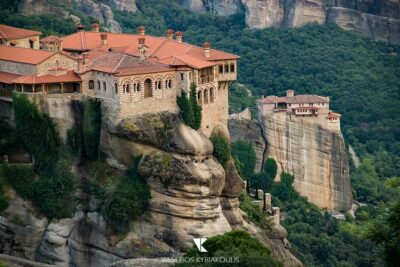
Meteora Monasteries & Caves DayTrip from Athens with Greek Lunch
Read our review →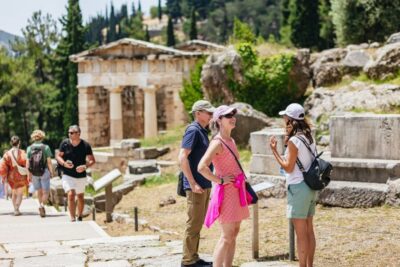
4-Day Classical Greece Tour: Epidaurus, Mycenae, Olympia, Delphi, Meteora
Read our review →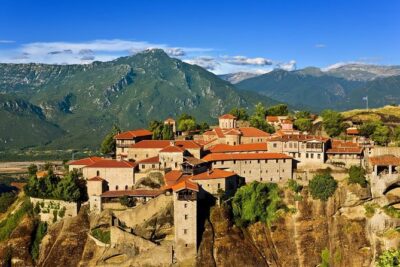
Meteora Monasteries, Hermit Caves Tour with Pickup
Read our review →Browse the lists this tour appears in